
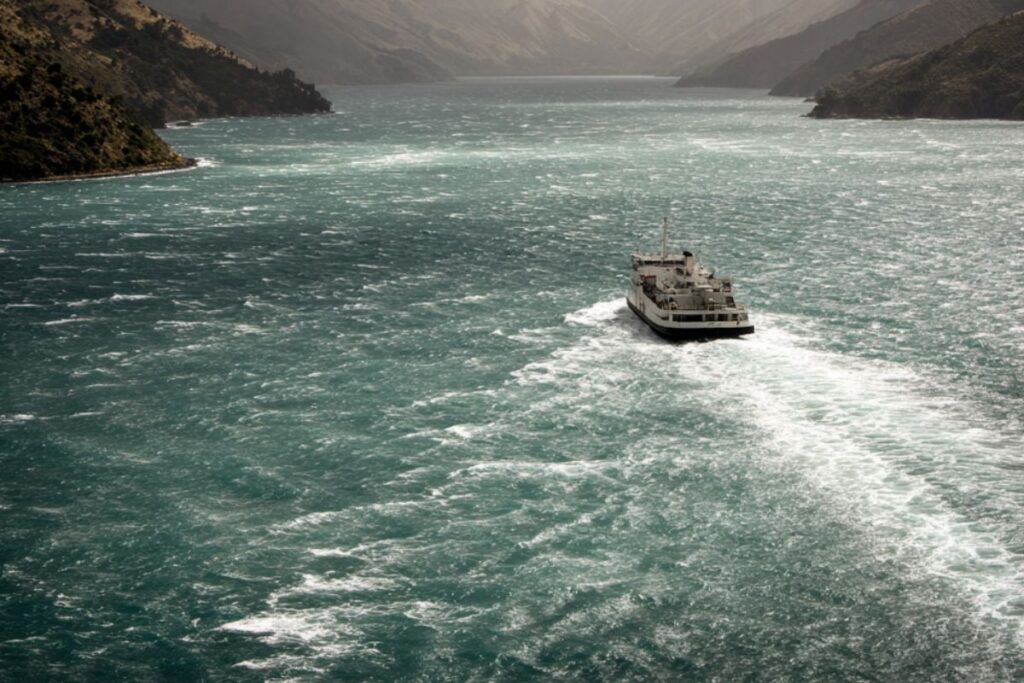
The Cook Strait is one of the most complex ferry corridors in the world. Travellers usually look only at the timetable, but the reality is that weather windows are the primary factor affecting crossing reliability, comfort and even vessel routing.
Unlike open-sea routes, the Wellington–Picton crossing combines harbour microclimates, Straight wind tunnels, and tidal channels, making weather prediction far more critical than many guides acknowledge.
1. Why the Cook Strait amplifies weather instability
The geography between New Zealand’s North and South Islands acts like a funnel:
- The Nor’Wester accelerates between the landmasses.
- Wellington Harbour has gust corridors exceeding surrounding wind speeds by 20–40 percent.
- Strait swell patterns collide from multiple directions.
Typical effects of wind patterns
| Wind direction | Impact | Outcome |
|---|---|---|
| Nor’Wester | Strong funnel effect | 10–25 min delay |
| Southerly | Steep swell | Rough crossings |
| Easterly | Harbour chop | Generally smooth |
| Northerly | Swell rebound | Minor delays |
2. Why are morning sailings more stable
Morning crossings are historically more reliable because:
- Overnight cooling reduces winds.
- Thermal winds haven’t developed yet.
- Port traffic is lower early in the day.
3. Swell direction and period
Swell affects the crossing more than travellers expect:
- Cook Strait cross-swell creates unpredictable rolling.
- Arapawa Island swell rebound hits vessels sideways.
Swell period often matters more than height. A long-period 1.5m swell can feel worse than a 2.5m short-period swell.
4. Main causes of micro-delays
- Tory Channel arrival sequencing
- Harbour gust restrictions
- Speed reduction due to wind loading
- Swell resistance halfway across
5. How to choose the safest and smoothest time
Check the official timetable at:
https://wellingtonpicton.com/timetable/
Best conditions:
- Wind below 30 – 35 knots
- Swell below 2 – 2.5m
- Morning departure times
6. Traveller-specific advice
For seasickness-prone travellers
- Choose the earliest departure.
- Low swell = smoother travel.
For tight schedules
- Avoid late-afternoon departures during windy seasons.
7. Summary
Weather windows control the real travel experience. When combining the official timetable with an understanding of local wind and swell behaviour, travellers can significantly reduce delays and discomfort.